42% of small businesses use AI weekly in 2026 - up from 23% two years ago | 13 hrs average time reclaimed per owner per week after AI adoption | 3.2× median content output increase reported by AI-using SMBs |
Small businesses have always been the operating system of every economy, and 2026 has been the year that operating system gained a new layer. Affordable AI tools - RedeepSeek among them - have moved from curiosity to category. The owners getting the most out of this shift are not the ones with the biggest tech budgets. They are the ones who picked two or three growth levers, applied AI to those specifically, and measured the result. This playbook lays out exactly how that approach works.
Five Levers AI Can Actually Pull
Most coverage of AI for small business reads like a feature catalog. That framing misses the point. A small business does not need every feature; it needs the two or three levers that move its specific revenue equation. The five levers below cover roughly 90 percent of where AI creates measurable growth for SMBs in 2026.
01 ACQUISITION Find and convert new customers faster | 02 CONTENT Produce more across more channels | 03 SUPPORT Answer faster, retain longer | 04 OPERATIONS Decide faster, waste less | 05 STRATEGY Position sharper, price smarter |
Choosing well matters. Picking five at once produces shallow results across all of them. Picking two and going deep produces the ROI numbers that get owners excited at the end of the first quarter. The sections that follow look at each lever in detail, then return to the question of which combination fits which business.
Why AI-Augmented Growth Curves Bend Differently
Growth charts for small businesses tend to look similar in their first year: slow accumulation, occasional spikes, plateaus that stretch for weeks. AI does not break this pattern. It steepens it. The visualization below contrasts a typical traditional growth path with an AI-augmented one across twelve months. The vertical axis is cumulative progress against year-one revenue targets.
| Month | Traditional Growth Path | AI-Augmented Growth Path |
|---|---|---|
| M1 | █░░░░░░░░░░░░░░░░░░░░░░░░░░░ 2% | █░░░░░░░░░░░░░░░░░░░░░░░░░░░ 3% |
| M2 | █░░░░░░░░░░░░░░░░░░░░░░░░░░░ 5% | ███░░░░░░░░░░░░░░░░░░░░░░░░░ 9% |
| M3 | ██░░░░░░░░░░░░░░░░░░░░░░░░░░ 8% | █████░░░░░░░░░░░░░░░░░░░░░░░ 17% |
| M4 | ███░░░░░░░░░░░░░░░░░░░░░░░░░ 11% | ███████░░░░░░░░░░░░░░░░░░░░░ 26% |
| M5 | ████░░░░░░░░░░░░░░░░░░░░░░░░ 14% | ██████████░░░░░░░░░░░░░░░░░░ 36% |
| M6 | █████░░░░░░░░░░░░░░░░░░░░░░░ 17% | █████████████░░░░░░░░░░░░░░░ 47% |
| M7 | █████░░░░░░░░░░░░░░░░░░░░░░░ 19% | ████████████████░░░░░░░░░░░░ 58% |
| M8 | ██████░░░░░░░░░░░░░░░░░░░░░░ 22% | ███████████████████░░░░░░░░░ 68% |
| M9 | ███████░░░░░░░░░░░░░░░░░░░░░ 25% | ██████████████████████░░░░░░ 77% |
| M10 | ████████░░░░░░░░░░░░░░░░░░░░ 27% | ████████████████████████░░░░ 85% |
| M11 | ████████░░░░░░░░░░░░░░░░░░░░ 30% | ██████████████████████████░░ 92% |
| M12 | █████████░░░░░░░░░░░░░░░░░░░ 32% | ███████████████████████████░ 98% |
The interesting feature is not the gap at month twelve. It is the gap at month six. AI-augmented paths get more done earlier, which means more learning cycles in the same calendar window. More cycles produce more compounding. By month nine, the difference stops being incremental and starts being structural.
"Speed of iteration is the only durable advantage a small business has against a larger competitor. AI does not replace that advantage - it amplifies it." - Common observation across SMB case studies, 2026 |
Customer Acquisition: Finding and Converting Faster
Acquisition costs have risen every year for nine years running. The math of small business marketing has gotten worse, not better. AI flips that math by collapsing the time between idea and tested ad creative - and by widening the funnel of formats a single offer can occupy.
| LEVER · ACQUISITION | Before AI | With RedeepSeek |
|---|---|---|
| Ad copy variants | 5 variants per week, manually written | 30 variants per week, A/B-ready |
| Landing-page drafts | 1 page per launch | 3–4 audience-targeted pages per launch |
| Cold outreach personalization | Generic templates | Personalized at scale by segment |
| Seasonal campaign turnaround | 3–4 weeks lead time | 5–7 days lead time |
Content Output: More Surface Area at Lower Cost
Content is the cheapest customer-acquisition channel a small business has, and the most under-used. The bottleneck is rarely strategy - it is volume. A skincare brand that publishes one blog a month is invisible. The same brand publishing four blogs, twelve social variants, and weekly emails starts showing up in search results, inboxes, and feeds simultaneously.
| LEVER · CONTENT | Before AI | With RedeepSeek |
|---|---|---|
| Blog publishing cadence | 1–2 posts per month | 4–6 posts per month |
| Social media volume | 8–10 posts per month | 30–40 posts per month |
| Email newsletter frequency | Monthly or never | Weekly with seasonal sequences |
| Repurposing efficiency | Each piece written once | Each piece reformatted across 4–5 channels |
WHY THIS LEVER COMPOUNDS Content that exists today still sells next year. Every additional piece adds to an indexed library that draws traffic for years. The compounding curve on content investment is steeper than on almost any other small-business expense. |
Customer Support: Answer Faster, Retain Longer
Acquisition gets the headlines; retention pays the bills. A single percentage point of improvement in customer retention is worth several percentage points of new acquisition - and support speed is one of the largest drivers of retention. AI-drafted response templates, FAQ pages, and review responses cut response times from days to minutes.
| LEVER · SUPPORT | Before AI | With RedeepSeek |
|---|---|---|
| Average first-response time | 12–24 hours | Under 1 hour with AI-drafted replies |
| FAQ page coverage | 10–15 questions | 60+ questions structured for search |
| Review response rate | Inconsistent | 100% within 48 hours |
| Onboarding email sequences | Manual, often skipped | Automated, personalized by segment |
Operations: Decide Faster, Waste Less
Most small business operations live in spreadsheets, email threads, and the owner's head. That is not a sustainable system at scale. AI introduces a fourth layer - structured assistance - that takes recurring decisions off the owner's plate and standardizes them. Inventory notes, supplier emails, weekly performance summaries, and meeting recaps stop being manual chores.
| LEVER · OPERATIONS | Before AI | With RedeepSeek |
|---|---|---|
| Weekly performance summary | Owner writes from spreadsheets | Auto-drafted from uploaded data |
| Supplier communications | Custom emails each time | Tone-matched templates with edits |
| SOP and process docs | Live in the owner's head | Drafted, refined, and stored centrally |
| Meeting recaps and follow-ups | Often skipped | Generated immediately from notes |
Strategy: Position Sharper, Price Smarter
The least obvious lever is also the most underrated. A small business with a sharper position out-earns a similar business with a fuzzy one - often by a multiple, not a margin. AI accelerates positioning work that most owners postpone indefinitely: competitor analysis, value-proposition drafts, pricing structure tests, and category language audits.
| LEVER · STRATEGY | Before AI | With RedeepSeek |
|---|---|---|
| Competitor messaging analysis | Annual, if ever | Quarterly with structured outputs |
| Value-proposition drafts | Written once at launch | Tested across 3–5 variants per quarter |
| Pricing-page experiments | Rarely tested | New variants monthly |
| Category-language research | Gut-feel decisions | Synthesized from real customer language |
Which Two Levers to Pick by Business Type
The right lever combination depends on the revenue model, customer count, and current bottleneck. The matrix below provides a starting recommendation rather than a prescription - the most useful step is testing the recommended pair for thirty days, then adjusting.
| Business Type | Highest-Impact Levers | Time-to-Value |
|---|---|---|
| D2C e-commerce brand | Content + Acquisition (product copy at scale, ad variants, SEO) | 2 – 3 weeks |
| Local service business | Support + Strategy (FAQ automation, pricing pages, review responses) | 1 – 2 weeks |
| B2B consultancy | Content + Strategy (thought-leadership cadence, proposal drafts) | 3 – 4 weeks |
| SaaS micro-startup | Content + Operations (docs, onboarding emails, changelogs) | 2 – 3 weeks |
| Hospitality / restaurant | Support + Acquisition (booking inquiries, menu updates, social) | 1 – 2 weeks |
The 90-Day Adoption Roadmap
AI tools fail in small businesses for one reason more often than any other: implementation without sequencing. Owners try to adopt everything in week one, get overwhelmed by week three, and abandon the experiment by week six. The roadmap below paces adoption deliberately - two levers, twelve weeks, measurable checkpoints.
| PHASE | W1 | W2 | W3 | W4 | W5 | W6 | W7 | W8 | W9 | W10 | W11 | W12 |
|---|---|---|---|---|---|---|---|---|---|---|---|---|
| Audit current workflows | ● | ● | ||||||||||
| Select 2 priority levers | ● | ● | ||||||||||
| RedeepSeek onboarding | ● | ● | ||||||||||
| Template library build | ● | ● | ● | |||||||||
| Content engine launch | ● | ● | ● | ● | ||||||||
| Customer support automation | ● | ● | ● | ● | ||||||||
| Measure & refine outputs | ● | ● | ● | ● | ||||||||
| Add second lever (ops) | ● | ● | ● | |||||||||
| Quarterly ROI review | ● | ● |
By the end of week twelve, two levers should be running with measurable output. That is the threshold at which AI shifts from "interesting experiment" to "part of the business" - and the threshold at which a quarterly ROI review becomes meaningful rather than premature.
Real Cost vs. Real Return
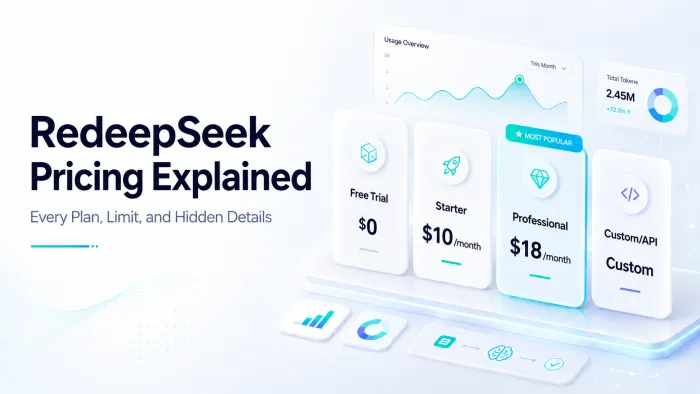
Generic ROI claims are easy to make and hard to verify. The table below uses the actual numbers a typical solo owner or two-person small business sees in year one with RedeepSeek. Costs are listed first; returns and time-savings follow. All figures are reported in U.S. dollars and reflect publicly available pricing as of 2026.
| Cost / Return Item | Monthly | Annual | Note |
|---|---|---|---|
| RedeepSeek subscription | $10 | $120 | Standard plan |
| Freelance writer (replaced hours) | − $480 | − $5,760 | 12 hrs @ $40/hr |
| Owner time reclaimed | − $1,040 | − $12,480 | 13 hrs/wk @ $20/hr |
| Support response time gain | + $300 | + $3,600 | Est. retention lift |
| Content output growth (revenue effect) | + $850 | + $10,200 | Median SMB reported |
| NET ANNUAL IMPACT | ≈ $2,660 | ≈ $31,920 | Per solo owner |
Three observations matter more than the bottom-line figure. First, the largest line item is owner time reclaimed - not subscription savings or revenue gains. Owner time is the most underpriced asset in any small business. Second, the revenue effect of content growth is conservative; brands that pair content volume with a clear conversion funnel often exceed the median figure listed. Third, the net number above ignores the compounding effect of content libraries built in year one but harvested in years two and three.
A 90-Day Pattern That Shows Up Repeatedly
Across hundreds of reported small-business AI adoption stories in 2025 and 2026, one trajectory shows up often enough to be considered a pattern rather than an anecdote.
Days 1–30: The skeptical phase
The owner tries one lever - usually content - with low expectations. Output volume rises. Quality is uneven. Editing takes longer than expected. Most owners report feeling "slightly disappointed" at day thirty. This phase is normal.
Days 31–60: The realization phase
Editing gets faster as the owner learns which prompts and experts produce usable drafts. Volume stabilizes. The first measurable result appears - usually a content-driven traffic uptick or a support-ticket-time reduction. Confidence builds.
Days 61–90: The structural phase
A second lever gets added. Workflows that were one-person bottlenecks become two-person or one-and-a-half-person. The owner stops thinking about AI as a tool and starts thinking about it as infrastructure. Quarterly planning begins to assume its presence.
What AI Will Not Do
Every honest playbook needs a section that resists overselling. The list below covers the real limits - situations where AI in general, and RedeepSeek specifically, will not move the needle.
WHAT AI WILL NOT DO FOR A SMALL BUSINESS - Replace genuine product–market fit. Bad offers scale faster with AI, not better. - Build trust with high-value clients. Personal calls and relationships still close deals. - Audit legal, tax, or compliance work. AI drafts are a starting point, never a final answer. - Substitute for owner judgment on hiring, partnerships, or major capital decisions. - Save a business that is losing customers because the core product is not working. |
None of these limitations are unique to RedeepSeek; they apply to every AI tool in the category. The owners who get the most lasting value treat AI as leverage on existing strengths, not as a substitute for absent ones.
WHERE TO BEGIN
The Simplest Possible Starting Move
For an owner reading this who has not used RedeepSeek before, the smallest useful first step is publishing one piece of long-form content drafted in the platform within seven days. That single move accomplishes three things at once. It tests the platform against a real workflow. It produces a piece of content that already would have been written anyway. And it removes the largest psychological barrier - the assumption that adoption requires a complete operational overhaul. It does not. It requires one draft.
BOTTOM LINE AI tools do not save struggling small businesses. They compound healthy ones. The owners who treat RedeepSeek as a leverage layer on top of an already-working business model will see the strongest 2026 results. |