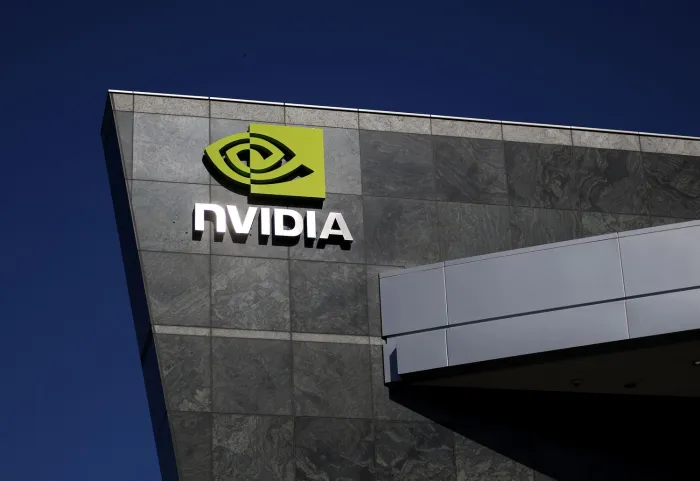
Nvidia is preparing to raise its annual spending in Taiwan to about $150 billion, a move that shows how central the island has become to the global artificial intelligence supply chain.
CEO Jensen Huang announced the figure in Taipei during an event for Nvidia’s planned Taiwan headquarters. He described Taiwan as the “epicentre” of the AI revolution and said the company’s spending in the country has grown dramatically over the past few years.
Four to five years ago, Nvidia was spending roughly $10 billion to $15 billion a year in Taiwan. That figure has now climbed to about $100 billion and is expected to move toward $150 billion annually. Huang did not say how long Nvidia plans to maintain spending at that level.
Why Taiwan Matters So Much to Nvidia
Taiwan sits at the center of Nvidia’s AI hardware engine. The island is home to Taiwan Semiconductor Manufacturing Company, better known as TSMC, the world’s most important contract chipmaker and a key manufacturing partner for Nvidia’s advanced AI processors.
Nvidia designs the chips that power many of the world’s AI systems, but it depends heavily on Taiwan’s manufacturing ecosystem to turn those designs into physical products. TSMC produces many of Nvidia’s most advanced semiconductors, while other Taiwan-linked suppliers help build servers, systems, components, and AI infrastructure.
That makes Taiwan more than a supplier base. It is one of the main production hubs behind the AI boom. As cloud companies, governments, enterprises, and startups spend heavily on AI infrastructure, Nvidia needs a reliable manufacturing network capable of producing chips and systems at massive scale.
Nvidia’s New Taiwan Headquarters
The spending announcement came as Nvidia celebrated plans for a new Taiwan headquarters in Taipei. Huang said the company expects to break ground this year, with operations targeted for 2030.
The headquarters is expected to bring Nvidia physically closer to its most important manufacturing partners. That proximity matters because AI hardware is becoming more complex. Nvidia’s chips are no longer standalone components. They are part of larger systems involving advanced packaging, high-speed memory, servers, networking, cooling, and full data center designs.
A stronger Taiwan presence could help Nvidia coordinate more closely with suppliers as it scales production for future AI platforms. It also signals that the company sees Taiwan as a long-term base for AI hardware development, not just a place for outsourced manufacturing.
A Massive Jump From Just a Few Years Ago
The scale of Nvidia’s Taiwan spending shows how quickly the AI chip market has changed. A few years ago, the company’s annual Taiwan spending was in the low tens of billions. Now, it is moving toward a level that would have seemed extraordinary before the generative AI boom.
The reason is simple: demand for AI chips has surged faster than most of the industry expected. Data centers need more graphics processing units, networking equipment, and full AI servers to train and run large AI models. Nvidia has become the dominant supplier in that market, and its supply chain has had to expand accordingly.
The $150 billion annual figure reflects more than chip orders. It points to the wider cost of building an AI computing stack at global scale. Advanced AI systems require semiconductors, packaging, memory, boards, servers, racks, networking, power systems, and manufacturing coordination across several suppliers.
Taiwan’s Role in the AI Economy
Huang’s comments also highlight Taiwan’s growing economic importance in the AI era. The island already plays a critical role in global electronics, but AI has pushed that role even higher.
TSMC remains the anchor of Taiwan’s semiconductor strength, but the country’s importance extends beyond wafer manufacturing. Taiwanese companies are deeply involved in server assembly, AI system integration, supply chain logistics, and hardware engineering. That gives Nvidia access to a dense cluster of expertise that is difficult to replace quickly.
For Nvidia, Taiwan offers speed, scale, and technical depth. For Taiwan, Nvidia’s growing spending reinforces the island’s position as one of the most valuable nodes in the global technology economy.
The Geopolitical Layer
Nvidia’s deeper commitment to Taiwan also comes with geopolitical significance. Taiwan is central to the global chip supply chain, but it also sits at the heart of U.S.-China technology tensions. China claims Taiwan as its own territory, while Taiwan operates as a self-governed democracy.
That makes Taiwan’s semiconductor industry strategically sensitive. Any disruption in Taiwan would affect not just Nvidia, but the broader global technology sector. The world’s most advanced AI chips depend on manufacturing capacity concentrated in a small number of highly specialized facilities.
Nvidia’s decision to increase spending in Taiwan suggests the company still sees the island as indispensable, despite the risks. The move also reflects the reality that no other region currently offers the same combination of advanced semiconductor manufacturing, supplier depth, and AI hardware production capacity.
What It Means for the AI Race
The announcement is another sign that the AI race is becoming a manufacturing race as much as a software race. Companies building AI models need enormous computing power, and that demand flows directly into Nvidia’s supply chain.
For cloud providers and enterprise AI companies, Nvidia’s Taiwan expansion could help improve access to future chips and systems, though supply constraints are likely to remain a major issue. For competitors, it reinforces how hard it is to challenge Nvidia’s position without an equally deep manufacturing and supplier network.
Nvidia is not just selling chips anymore. It is building the infrastructure layer behind the AI economy. Taiwan is the production center helping make that possible.
Nvidia’s Bigger Bet
Nvidia’s planned $150 billion annual Taiwan spending is not just a financial headline. It is a statement about where the company believes the future of AI hardware will be built.
The company’s growth now depends on its ability to turn demand for AI computing into real-world supply at a massive scale. Taiwan gives Nvidia the manufacturing base, supplier network, and technical ecosystem needed to do that.
The investment also shows how deeply the AI boom is reshaping global technology supply chains. As AI models get larger and infrastructure spending accelerates, the companies and regions that can produce the hardware will become even more important.
For Nvidia, Taiwan is no longer just a critical partner. It is one of the foundations of its AI empire.